ICT & COMPUTER SCIENCE

Computing education equips our students to use computational thinking and creativity to understand and change the world. By exploring the deep links between mathematics, science, and design and technology, students gain unique insights into both natural and artificial systems.

At its core, our curriculum focuses on Computer Science, where students master the principles of information and computation. This foundation now extends into the frontier of Artificial Intelligence (AI) and Machine Learning, teaching students how systems learn from data and simulate human intelligence. Through programming and Physical Computing, students put this knowledge into practice—transitioning from virtual code to physical action. With the integration of VEX Robotics, students engage in hands-on engineering and automation, learning to build and command intelligent systems that interact with the physical world.

Our goal is to ensure students become digitally literate—able to express themselves and develop complex ideas through technology—preparing them to be both leaders in the future workplace and responsible, active participants in an increasingly automated digital world.

The curriculum for computing aims to ensure that all students:

  • Understand and apply the fundamental principles and concepts of computer science, including abstraction, logic, algorithms, and data representation.
  • Engage with emerging technologies, gaining a foundational understanding of Artificial Intelligence and how Machine Learning models are trained and utilised.
  • Analyse problems in computational terms through repeated practical experience. This includes writing complex computer programs and designing autonomous behaviours for VEX Robotics to solve real-world challenges.
  • Evaluate and apply information technology analytically, including new or unfamiliar systems, to solve problems creatively.
  • Develop into responsible, competent, and confident users of ICT, understanding the ethical implications of AI and the impact of robotics on society.
  • AI & Machine Learning: Moving beyond just “using” computers to understanding “intelligent” systems.
  • VEX Robotics: This adds a competitive and collaborative engineering edge to the department. It moves the curriculum from “screen-only” to “tangible” problem-solving.
  • Physical Computing: Mentioning this bridges the gap between the code (CS) and the hardware (Robotics).
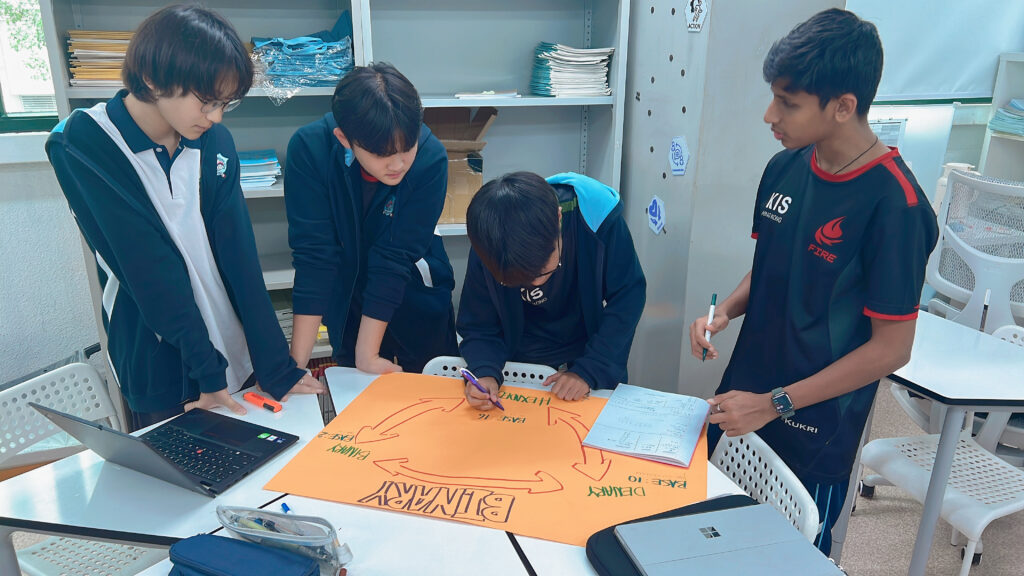
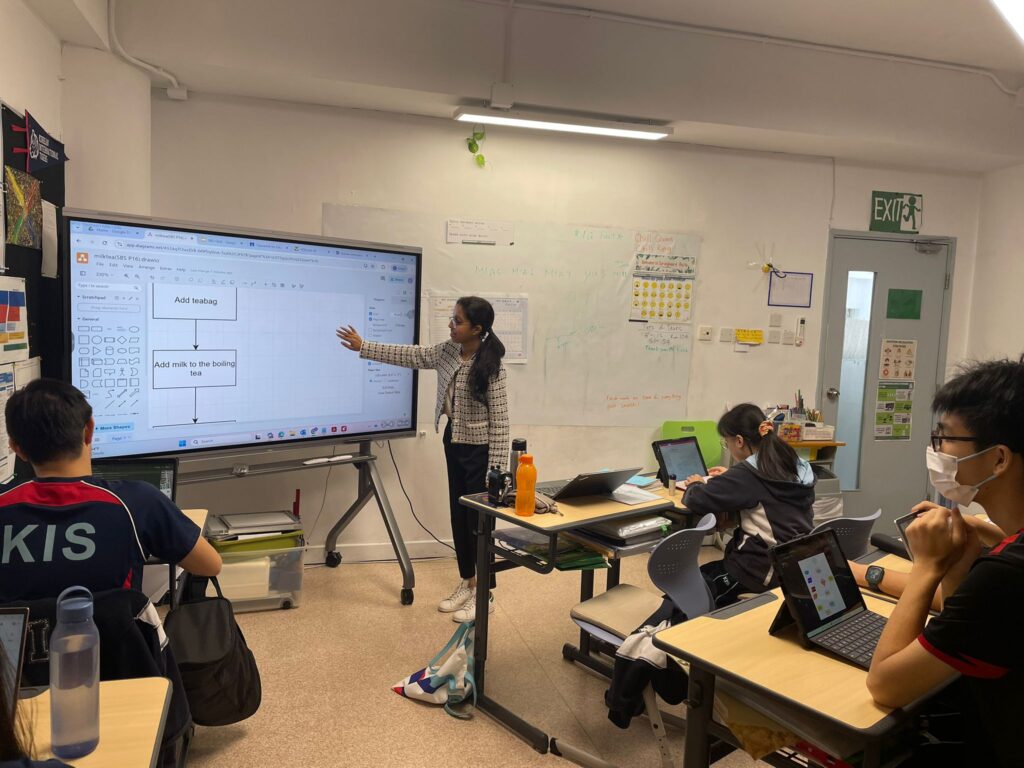
At Korean International School, the Primary students learn to become critical and increasingly autonomous users of Information and Communication Technology (ICT) and use and explore the concepts, tools, and relevant technical terms associated with  ICT systems and software. Aside from internet safety, they will also understand and create engaging computer-based solutions to problems using algorithms and a basic-level block-based programming language.

At the Lower Secondary level, our curriculum (aligned with Cambridge Lower Secondary Computing 0860 and Digital Literacy 0082) transitions students from being digital consumers to becoming digital creators. We provide a rigorous foundation in problem-solving, logical reasoning, and the mastery of modern technological tools.

We utilise industry-leading platforms and languages to ensure students develop versatile coding skills:

  • BSD Education: Students use the BSD platform to engage with real-world coding projects, bridging the gap between theoretical concepts and professional digital products.
  • Python Programming: As students progress, they are introduced to Python, a powerful, high-level language. They learn to write concise code to solve complex problems, preparing them for the demands of Upper Secondary IGCSE Computer Science.

Logic meets engineering through our VEX IQ Robotics program. Students don’t just write code for a screen; they build and program autonomous robots to navigate the physical world. This hands-on experience teaches:

  • Mechanical Design: Building structures that can interact with objects.
  • Sensor Integration: Using data from the physical world to influence robot behaviour.
  • Automation: Developing algorithms that allow machines to function independently.

Understanding the “brain” behind modern technology is essential. Our students explore:

  • Foundations of AI: How machines simulate intelligence and learn from patterns.
  • Machine Learning: The process of gathering, organising, and modelling data to “train” systems.
  • Responsible Use of AI: We place a heavy emphasis on the ethics of AI. Students learn to use AI tools effectively while understanding their limitations, the importance of human oversight, and the necessity of academic integrity.

To ensure our students are “workplace ready,” we integrate essential Google Workspace tools into their daily learning. Students master:

  • Collaboration: Using Google Docs and Slides for real-time teamwork.
  • Data Handling: Using Google Sheets for advanced modelling, formulas, and data visualisation.
  • Research & Feedback: Using Google Forms for data collection and analysis.

By the end of Year 9, our students are not only proficient in Python and Robotics but are also responsible users of AI. This strong foundation ensures they are fully prepared for the challenges of IGCSE Computer Science, where they will continue to build advanced computer-based solutions for the real world.

In the Upper Secondary phase, students transition to the formal study of the Cambridge IGCSE Computer Science (0478). This course shifts the focus toward the “under the hood” mechanics of technology, where students evolve from digital users into analytical engineers. The curriculum explores the fundamental principles of computing, including binary logic, data representation, and the physical architecture of the CPU. Students also examine the infrastructure of the digital age, covering high-level networking, data transmission protocols, and the critical importance of cybersecurity in modern systems.

Building on the logical foundations laid in Key Stage 3, the practical component of the course focuses on advanced problem-solving using Pseudocode/Python programming. Students move beyond basic scripts to design, code, and formally test complex algorithms. Additionally, the syllabus introduces Automated and Emerging Technologies, where students explore the theory behind Artificial Intelligence (AI) and how automated systems are transforming industries. This combination of theoretical depth and practical coding ensures that students are not only prepared for their examinations but are equipped with the technical agility required for A-Level success and beyond.

  • Resilience in Programming: Developing the ability to debug and refine Pseudocode solutions to meet professional-grade specifications.
  • Logical Architecture: Deep dives into Boolean logic, gate diagrams, and hardware interaction.
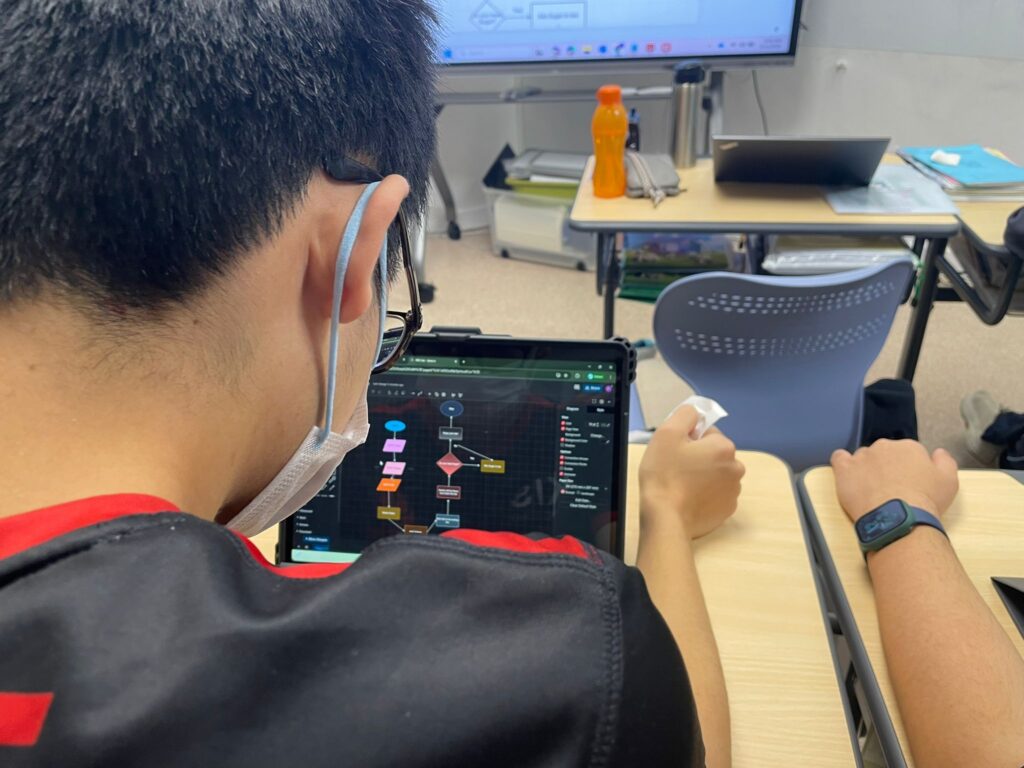
  • Algorithmic Thinking: Mastery of standard algorithms, flowcharts, and pseudocode to solve complex real-world tasks.
  • Emerging Tech: Theoretical study of AI, robotics, and automated systems as part of the modern computing landscape.

In Year 12 (AS Level), students begin a deep dive into the theoretical and logical architecture of computational systems. A central focus of this year is mastering Pseudocode; by stripping away the complexities of specific programming syntax, students learn to think in pure logic. This allows them to design intricate algorithms and data structures—such as linked lists, stacks, and queues—while developing a profound understanding of the “Universal Teacher” logic that underpins all programming languages. On the theoretical side, students explore advanced hardware architecture, operating systems, and the ethical implications of a data-driven society.

As students progress into Year 13 (A Level), the focus shifts to professional-grade implementation and complex system design. Students transition from pseudocode to Python, applying their logical foundations to solve sophisticated programming challenges and complete practical assessments. The curriculum expands into advanced domains, including Artificial Intelligence (AI), and the intricacies of high-speed networking and cybersecurity. This final stage of their secondary education is designed to bridge the gap between school and university, equipping students with the high-level computational thinking and practical Python mastery required to innovate in the global tech industry.